Technology is supposed to be liberating. Often people use a tweet to link to an image containing lots of text. That's an image (often JPG with lovely compression artefacts) rather than something better suited to representing text, like, er, text.
Using an image to represent text is dumb. It means you can't do much with the text except read it. Many people are lucky to even read it, as it's not going to be compatible with browser settings which make text bigger, higher contrast, or synthesise it as speech. Nobody can use copy and paste, or save it somewhere. Search engines can't index it. In short, this is turning information back into restrictive data. Which is particularly crap as it started out as information (someone typed it). All that was required was preservation of that information!!
Again, technology is supposed to be liberating.
Apparently they're now experimenting with doubling the character limit to 280 characters.
How about keeping the 140 character tweets (so you can rifle through the chaff easily enough, and it's still all realtime and light), but tweets should support longer text attachments, which you can get to by clicking on the tweet.
Wednesday, 27 September 2017

Monday, 17 July 2017
Tory manifesto
Me: "Have you read the manifesto? They don't believe in untramelled free markets!"
Partner: "Who, Labour?"
Partner: "Who, Labour?"
Sarcastic email to MP about energy price controls
Dear Mr MP,
I know parliament is dissolved and you only want to hear about important matters but I can’t contain my enthusiasm about the following matter!
Regarding implementing a similar policy to Ed Miliband’s freeze on energy prices (one of the things which prompted the Daily Mail’s misguided 2015 election headline “A Return to the Bad Old Days"), since this can’t have any drawbacks, I look forward to the government banning holiday companies charging more during school holidays, McLaren being made to price their cars within reach of normal folk, and many other things. I’m glad that the market is being sent a signal that rather than responding to the caprices of supply and demand, it should instead consider what Mrs May would want it to do. This common sense move will surely convince foreign investors that Britain is a strong and stable place to come and do business, especially in the wake of Brexit. Furthermore the policy will benefit the people of Venezuela, whose government will finally be able to learn the correct implementation of price controls, so that toilet paper shortages can become a thing of the past.
Yours sincerely,
I know parliament is dissolved and you only want to hear about important matters but I can’t contain my enthusiasm about the following matter!
Regarding implementing a similar policy to Ed Miliband’s freeze on energy prices (one of the things which prompted the Daily Mail’s misguided 2015 election headline “A Return to the Bad Old Days"), since this can’t have any drawbacks, I look forward to the government banning holiday companies charging more during school holidays, McLaren being made to price their cars within reach of normal folk, and many other things. I’m glad that the market is being sent a signal that rather than responding to the caprices of supply and demand, it should instead consider what Mrs May would want it to do. This common sense move will surely convince foreign investors that Britain is a strong and stable place to come and do business, especially in the wake of Brexit. Furthermore the policy will benefit the people of Venezuela, whose government will finally be able to learn the correct implementation of price controls, so that toilet paper shortages can become a thing of the past.
Yours sincerely,
Monday, 10 July 2017
Higher education
Cheap, accessible, high quality. Pick any two.
Cheap - either to students or to the wider tax paying public.
Accessible - in that it's open to a large percentage of the population.
High quality - in that the spending of 3/4 years at uni results in lots of contact hours with good teachers and researchers, lots of feedback, suitable resources etc.
Cheap - either to students or to the wider tax paying public.
Accessible - in that it's open to a large percentage of the population.
High quality - in that the spending of 3/4 years at uni results in lots of contact hours with good teachers and researchers, lots of feedback, suitable resources etc.
Thursday, 29 June 2017
Furthermore, build more houses
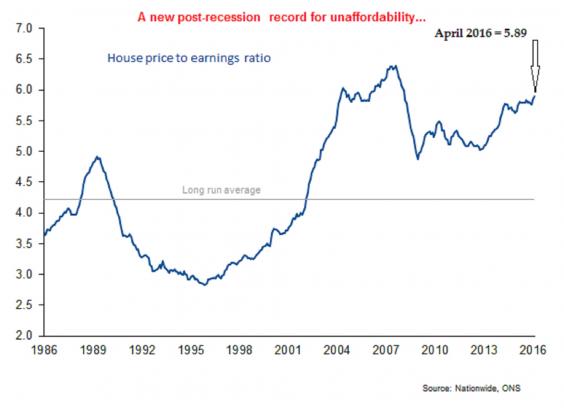
Reasons to build more houses:
- Putting a roof over your head is an outgoing, and as such should be as cheap as possible. If you want an investment, invest in the stock market.
- It would reduce the state's housing benefit bill, and possibly reduce the pressure to increase public sector wages.
- It would give people choices. They might wish to reduce their need for job security, or take a job that is more interesting but pays less well.
- Unlike HS2, it would help alleviate London centrism.
- Equality of opportunity - the most imporant one. Children shouldn't need an inheritance from their parents to get anywhere in life. Perhaps that could be stressed to NIMBYs who want to protect the size of that inheritance.
- Buy-to-let landlords are growing fat and lazy. They need help for their own good.
- Tax or student loans wouldn't seem so expensive.
Monday, 26 June 2017
TV licence and iPlayer
I wrote to my old MP a while ago:
Now when I open the Android iPlayer it tells me "you will soon need an account to watch iPlayer".
If they're introducing an account system, it nearly completely undermines the need for legislation. So is it going to be repealed?
I write referring to the government’s intention to close the "iPlayer loophole”, by widening the requirements for a TV licence.And received some platitude about the technical solution not being deemed the best option (obviously).
According to the culture secretary John Whittingdale, "When the licence fee was invented, video on demand did not exist. And while the definition of television in the legislation covers live streaming, it does not require viewers to have a licence if they watch BBC programmes through the iPlayer even if it is just a few minutes after transmission.”
When the licence fee was invented, it was impossible to prevent freeloading, so the obvious solution was a compulsory telly licence. However, now it is certainly possible to prevent people consuming streaming media unless they’ve paid for it or can otherwise prove they’re entitled. There are technical solutions that the BBC could readily deploy.
Increasing the amount of legislation should always be the last resort. I would have hoped that a Conservative government instinctively understood that sort of thing!
Now when I open the Android iPlayer it tells me "you will soon need an account to watch iPlayer".
If they're introducing an account system, it nearly completely undermines the need for legislation. So is it going to be repealed?
Tuesday, 28 February 2017
NHS jabs
Was told by letter to arrive at a health centre at a particular time for junior's inoculations. Queued at GP's reception desk, was told it's in the clinic which was in a different part of the building. Queued at reception there, was told that junior wasn't on their computer, so we'd have to go back to the GP's reception and get that sorted. Queue again at the GP's, to be given two forms. One was the standard NHS form, and the other was the standard GP questionnaire. The second included questions like how much junior smokes and drinks, whether junior has a full time carer, and lots of questions about medical history when there is no medical history. Ten minutes to fill all that out. Queue again to hand it back, to be told they're very busy but they'll enter it into the computer as soon as they can. This took ages because the receptionist kept having to deal with other patients and answer the phone. Back to the clinic, queue again. 1hr40min after arriving, junior got the jabs.
That's nearly two hours (spent milling around ill possibly contagious people) I'll never get back.
How did they generate the appointment letter without junior being on their database?
Surely so many resources must be squandered because of processes like the above that nobody takes ownership of and improves. Smaller queues, less demand on receptionists, more of my time for earning money, an emptier car park, less time around sick people, which in turn leads to fewer sick people, etc.
That's nearly two hours (spent milling around ill possibly contagious people) I'll never get back.
How did they generate the appointment letter without junior being on their database?
Surely so many resources must be squandered because of processes like the above that nobody takes ownership of and improves. Smaller queues, less demand on receptionists, more of my time for earning money, an emptier car park, less time around sick people, which in turn leads to fewer sick people, etc.
Monday, 27 February 2017
HS2 briefly
From HS2.org.uk, "HS2 will create around 25,000 jobs and fuel economic benefits worth over £103 billion to the UK.” The claimed cost is £55billion, and this implies a benefit cost ratio of 1.87.
If it’s a good idea, but sadly doesn’t involve enough direct recoupable benefits for entirely private funding, then external benefits should still be extremely easy to find. A BCR of 1.87 that is also flimsy doesn’t look good. I assume the BCR doesn’t account for the fact that raising the tax to pay for it will do damage - the tax wedge. I think a fair BCR which takes into account the tax wedge would show that the project will make us poorer.
Regarding the jobs created, at 55 billion / 25,000 = £2.2M per job, I’d make a pure guess that that £2.2M of tax is at least one private sector job prevented or destroyed, again due to the cost of the tax. Furthermore, regarding the north/south divide, which half suffers more when there's extra tax? My money would be on the north.
The only convincing reason for HS2 seems to be that it would inevitably release greenbelt land for housing. But I can’t bring myself to think spending fifty billion plus for a side effect is sensible. The boring answer for the north/south divide seems to be decentralisation with tax-cutting powers, and building many many more houses. Evidence from around the world seems to suggest that high speed rail links are not the answer to regional imbalances.
With all three main parties in favour at the last election, you could say the electorate never had much of a choice.
I can see why governments pursue bad popular ideas (votes), and unpopular good ones (lack of choice usually, dressed up as good leadership), but I can't fathom why an unpopular bad idea has progressed so far.
If it’s a good idea, but sadly doesn’t involve enough direct recoupable benefits for entirely private funding, then external benefits should still be extremely easy to find. A BCR of 1.87 that is also flimsy doesn’t look good. I assume the BCR doesn’t account for the fact that raising the tax to pay for it will do damage - the tax wedge. I think a fair BCR which takes into account the tax wedge would show that the project will make us poorer.
Regarding the jobs created, at 55 billion / 25,000 = £2.2M per job, I’d make a pure guess that that £2.2M of tax is at least one private sector job prevented or destroyed, again due to the cost of the tax. Furthermore, regarding the north/south divide, which half suffers more when there's extra tax? My money would be on the north.
The only convincing reason for HS2 seems to be that it would inevitably release greenbelt land for housing. But I can’t bring myself to think spending fifty billion plus for a side effect is sensible. The boring answer for the north/south divide seems to be decentralisation with tax-cutting powers, and building many many more houses. Evidence from around the world seems to suggest that high speed rail links are not the answer to regional imbalances.
With all three main parties in favour at the last election, you could say the electorate never had much of a choice.
I can see why governments pursue bad popular ideas (votes), and unpopular good ones (lack of choice usually, dressed up as good leadership), but I can't fathom why an unpopular bad idea has progressed so far.
Monday, 13 February 2017
Jeremy Corbyn
Old post in drafts folder...
Clearly this isn't just about Labour's lacklustre remain campaign. The PLP never thought Corbyn could win an election, and they were hoping he'd go before the next one. The next election is probably going to happen sooner rather than later, so they need to force matters.
Labour already properly tried the unions' choice, Ed Miliband, and he soundly lost the 2015 election. So it's not very likely that someone even more anoraky and student-socialist is going to do any better. More socialist narrative and denial about the overspending of the New Labour years isn't going to win elections.
What won elections was New Labour not Old Labour, economic credibility, keeping the movement's crazies in the attic: Blair. The country needs a credible alternative to the Tories to keep them honest. Without a strong Labour, the working class will turn to UKIP, who are opportunist populist plonkers. Blair and people in his mould can also be blamed for turning people off mainstream politics but that's something to worry about when other more important problems are solved.
One very stupid thing Miliband did was selling Labour leadership votes for £3. This is why Corbyn won by such a landslide. Everyone who left Labour because it wasn't lefty enough, or any narrow-minded Tory, could pay £3 and vote for Corbyn. Who is going to pay £3 to vote for someone more mainstream like Burnham? His supporters are very likely to be full members. This was only ever going to move the party to the left.
I think the Tories really want Corbyn in charge for an election. A team will pour over every commons vote, every article he's ever written, and speech given. There will be never ending questions along the lines of asking him to distance himself from past unfashionable views, which he won't do. Some of the characters involved in Momentum should be an embarrassment to a credible future PM but will be a goldmine to the Tories.
The membership need to ask themselves if they want a party that's electable or whether they just want someone to preach to the converted and to pat the membership on the back. If they re-elect Corbyn then there's going to be more revolt in the PLP, and things will get nastier. De-selections, etc.
P.S. This was an interesting read: http://www.newstatesman.com/2016/08/explaining-love-jeremy-corbyn
Clearly this isn't just about Labour's lacklustre remain campaign. The PLP never thought Corbyn could win an election, and they were hoping he'd go before the next one. The next election is probably going to happen sooner rather than later, so they need to force matters.
Labour already properly tried the unions' choice, Ed Miliband, and he soundly lost the 2015 election. So it's not very likely that someone even more anoraky and student-socialist is going to do any better. More socialist narrative and denial about the overspending of the New Labour years isn't going to win elections.
What won elections was New Labour not Old Labour, economic credibility, keeping the movement's crazies in the attic: Blair. The country needs a credible alternative to the Tories to keep them honest. Without a strong Labour, the working class will turn to UKIP, who are opportunist populist plonkers. Blair and people in his mould can also be blamed for turning people off mainstream politics but that's something to worry about when other more important problems are solved.
One very stupid thing Miliband did was selling Labour leadership votes for £3. This is why Corbyn won by such a landslide. Everyone who left Labour because it wasn't lefty enough, or any narrow-minded Tory, could pay £3 and vote for Corbyn. Who is going to pay £3 to vote for someone more mainstream like Burnham? His supporters are very likely to be full members. This was only ever going to move the party to the left.
I think the Tories really want Corbyn in charge for an election. A team will pour over every commons vote, every article he's ever written, and speech given. There will be never ending questions along the lines of asking him to distance himself from past unfashionable views, which he won't do. Some of the characters involved in Momentum should be an embarrassment to a credible future PM but will be a goldmine to the Tories.
The membership need to ask themselves if they want a party that's electable or whether they just want someone to preach to the converted and to pat the membership on the back. If they re-elect Corbyn then there's going to be more revolt in the PLP, and things will get nastier. De-selections, etc.
P.S. This was an interesting read: http://www.newstatesman.com/2016/08/explaining-love-jeremy-corbyn
Friday, 1 July 2016
Brexit
I think the country's just done something terribly stupid. You can sum up the remain case with "lots of risks and no clear benefits". Boring and unsexy, but boring and unsexy are mostly good in politics. I've been trying to find some comfort from some thoughtful Brexiters, but can't find any - the leave arguments are unconvincing. I very much agree with what British Dude and Niall Ferguson have written.
I can't even share the optimism of many in my neck of the woods on the political spectrum, that it's going to herald a new age of confronting our self-made problems. I think this is wishful thinking. Plans rarely survive the first engagement with the enemy. Leaving the EU could just as likely shift the political landscape to Corbyn or the Kippers.
I can't even share the optimism of many in my neck of the woods on the political spectrum, that it's going to herald a new age of confronting our self-made problems. I think this is wishful thinking. Plans rarely survive the first engagement with the enemy. Leaving the EU could just as likely shift the political landscape to Corbyn or the Kippers.
Tuesday, 17 June 2014
RIPA
Good article by Carswell on the Regulation of Investigatory Powers Act. The problem isn't that we're using it to fight terrorism, but that the number of public bodies that can request snooping powers for a whole host of reasons is stupid and depressing. Really not nice to think about, in fact.
Sad the government hasn't done anything about this.
Sad the government hasn't done anything about this.
Tuesday, 15 April 2014
Data Loggers for Cheaper Insurance
A follow-up to the last post. Recalling the incident with the National Grid van reminds me that I need to buy a video camera for my bike so if bad stuff happens then I have some evidence. I did contact the National Grid to report the incident, but they said it would be impossible to track the driver down, and they don't use GPS trackers / data loggers in their fleet.
They should. Those devices are great. I assume, because people can opt to have them for cheaper insurance, that they really do make people drive better. But what about liberty, big brother, etc? Don't see what the issue is. Have privacy concerns, don't like it, or want to drive like an idiot? Don't bother with a tracker then, but be prepared to pay extra. Why should you have to pay? Because your risk changes. You pay according to the risk you represent.
Ah, so why is it a problem if the government made them compulsory? General reasons against governments increasing their meddling portfolio:
They should. Those devices are great. I assume, because people can opt to have them for cheaper insurance, that they really do make people drive better. But what about liberty, big brother, etc? Don't see what the issue is. Have privacy concerns, don't like it, or want to drive like an idiot? Don't bother with a tracker then, but be prepared to pay extra. Why should you have to pay? Because your risk changes. You pay according to the risk you represent.
Ah, so why is it a problem if the government made them compulsory? General reasons against governments increasing their meddling portfolio:
- Low hanging fruit. If something is important and requires some legislation it would probably already be in legislation by now. Since we don't already have it, it's worth noting that society hasn't fallen apart without it (we've survived a civil war, an industrial revolution, two world wars, etc). The possible new things governments can mandate are probably increasingly hard to implement, have unintended consequences, are controversial, etc.
- People can be trusted respond to incentives far more than people whose job it is to govern tend to give them credit for. When all you know how to do is hammer, every problem looks like a nail. People tend to overestimate their own competence. This is all important to note, given a political solution can be a heavy-handed approach to something as complex as human affairs.
- The proposed solution may not attack the root cause, or may not be well thought out. The people who write legislation tend to be career politicians with legal backgrounds. They're probably not engineers or scientists, who might care about keeping things simple and managing complexity.
- Politics. The proposed solution might be more about grabbing headlines, gamesmanship with the other side, etc. Like New Labour trying to outflank the Tories on law and order, terrorism, etc.
- Lobbying. The proposed solution might be a result of powerful interests who want some of the 45% ish of GDP controlled by the state directed their way, or want to make it harder for the little guys by making compliance with various new laws arduous.
- Eggs in one basket. If it's wrong, there's no diversity which might be helpful. For example, if government plans food production and gets it badly wrong, then we're really shafted.
- Whatever it is, it will probably generate more work for lawyers and accountants. That's a drag on the economy.
- If it's expanding the role of government, it's diluting democracy. That one single vote each person has then has to encompass more issues. It distracts from the important stuff, while people demand action and politicians jerk knees over this new stuff.
- Once government gets involved in something, it's damn hard to get rid of it. Imagine repealing the extreme porn law. There would be howls that doing so would be to send a signal that extreme porn is OK, etc.
- The medicine might be worse than the disease, e.g. with the war on drugs.
- Loads of reasons in the Road to Serfdom.
Sunday, 6 April 2014
Cycling
Twitter's 140 characters let me down again. Saw this on Twitter, about cycling and motorists, from a motorists' union. I wonder if they're a member of a wider umbrella union, representing unions for interests that already have society set up to suit them?
Next most common are acts of driving where the motorist has seen me and does something that turns out to be safe, but I don't know whether I've been seen, and it starts the same way as something far more dangerous, so I have to take evasive action. A driver pulling out of an opposite side road in my direction, but not coming all the way over to my side is a good example. Initially they're accelerating their car right at where I'm going to be, so I hit the brakes and the adrenaline gets flowing.
Then we have left hooks, when someone overtakes then immediately slows down and turns left. In one bad instance of that, I nearly ended up under a car. About as common as left hooks are cars pulling out of junctions who either haven't seen me or underestimate my speed. Once that happened when someone reversed into the road!
I say I couldn't give a toss about what drivers might be thinking, only the end result, however I haven't really been subject to being yelled at by a driver that I "don't pay road tax" or I "shouldn't be on the road", which many other cyclists have experienced. It's an alarming thought that someone in a car, a potentially lethal weapon, might give you less respect because they feel righteous, and one I try not to entertain.
All of this is unnecessary. People need to share the road. And prepare to give up the odd 5 or 10 seconds of time here and there so we can all do it safely. People should drive at speeds where they can react to anything that might happen in their window of vision. That means: not tailgating, slowing down when sun is in eyes, not piling into blind bends, etc. Obvious stuff.
I find such thinking alarming because it might give a motorist less concern than they should have that their car is a lethal weapon when used incorrectly. I know it's being used to try and rubbish the AA's campaign, but it belies a mentality. Another reason to be alarmed is the idea that by getting my bike out of the garage, I'm writing a disclaimer about what might happen to me.
Why do some drivers feel so threatened by all of this? Is it such a problem that they might have to do what's in the highway code?
And again, a cyclist is not implicitly entering into some kind of disclaimer by entering the domain of the car. We can all share. Cyclists should not be subjected to careless, pointless, impatient behaviour. Maybe the author might want to think of a better way of stopping that instead of rubbishing the AA's campaign and belittling the problem?
They ignore reality because it's your own personal reality which isn't the one other people inhabit. Cycling has net-positive health benefits. That's why it's encouraged.
My most terrifying experience was when I was narrowly missed by an oncoming National Grid van which was on my side of the road because it was overtaking something. Either didn't see me or didn't care. But hey I'm the one taking the risks, with my skinny tyres, and it's down to these people that we have an economy at all! What I was doing was unnecessary, but that driver saving a few seconds by overtaking something was crucial, and, besides, the NHS kills more people.
And breathe.
Millions of times a day drivers are safely and considerately negotiating their way past cyclists but to believe in an imaginary war, implies that drivers are deliberately going out to be rude, inconsiderate and dangerous to cyclists.Don't really give a toss about what's being implied, or whether a driver is going out of their way to be rude or not, only the end result that I witness when I'm on my bike. The most common one is not giving enough room when overtaking. Either out of impatience, someone feeling pressured by motorists behind, or because (the scary one) a car moves out, passes properly, but they're being tailgated by someone who hasn't left themselves enough time to react to things that materialise in their field of vision.
Next most common are acts of driving where the motorist has seen me and does something that turns out to be safe, but I don't know whether I've been seen, and it starts the same way as something far more dangerous, so I have to take evasive action. A driver pulling out of an opposite side road in my direction, but not coming all the way over to my side is a good example. Initially they're accelerating their car right at where I'm going to be, so I hit the brakes and the adrenaline gets flowing.
Then we have left hooks, when someone overtakes then immediately slows down and turns left. In one bad instance of that, I nearly ended up under a car. About as common as left hooks are cars pulling out of junctions who either haven't seen me or underestimate my speed. Once that happened when someone reversed into the road!
I say I couldn't give a toss about what drivers might be thinking, only the end result, however I haven't really been subject to being yelled at by a driver that I "don't pay road tax" or I "shouldn't be on the road", which many other cyclists have experienced. It's an alarming thought that someone in a car, a potentially lethal weapon, might give you less respect because they feel righteous, and one I try not to entertain.
All of this is unnecessary. People need to share the road. And prepare to give up the odd 5 or 10 seconds of time here and there so we can all do it safely. People should drive at speeds where they can react to anything that might happen in their window of vision. That means: not tailgating, slowing down when sun is in eyes, not piling into blind bends, etc. Obvious stuff.
The fact is that after 300 billion driver miles year, there's less death on the road from all causes than from accidents in the home and five times less than from NHS failure. So UK's drivers seem to be much better than the keen cyclists of The AA will credit.
Crude apples and oranges comparisons there. That'll be comforting to the families, that there's some context.
They forget to mention that our society, yes even The Thunderer, would collapse without our 35 million drivers but not without cyclists. There are only two types of road user that society must have; walkers and drivers.Good god. The choice isn't between a functioning society with a few deaths and the collapse of our economy. The choice is whether people can sacrifice the odd 5 seconds here and there to allow everyone to use the road safely. Classic false dichotomy.
The fact is that cycling isn't that crucial at all. Only a minority do it keenly and they are only in a tiny minority of London commuters too. This shows that The AA's 'Two tribes' claim is fallacious in every respect.What does it matter whether it's crucial? Drivers are responsible for not hitting things they can avoid hitting by driving responsibly. If drivers are responsible, then we don't have a problem, do we? Besides, what's crucial? Is a car journey crucial when it could be taken on foot? Is a car journey crucial when it's just for social reasons? We're dealing with different standards of crucial here, which is kind of a bullet-meets-foot moment when the author is (otherwise rightfully I think) arguing against a two-tribes mentality.
I find such thinking alarming because it might give a motorist less concern than they should have that their car is a lethal weapon when used incorrectly. I know it's being used to try and rubbish the AA's campaign, but it belies a mentality. Another reason to be alarmed is the idea that by getting my bike out of the garage, I'm writing a disclaimer about what might happen to me.
Why do some drivers feel so threatened by all of this? Is it such a problem that they might have to do what's in the highway code?
If there are massive safety issues about road cycling, then it is the duty of politicians, and your paper to preface any discussion with the question: 'Does our society need it?' 'Why must we have road cycling?'. A fair logical question isn't it?No, those questions are retarded, for reasons given above.
Why do we also ignore that road cycling is placing one's unprotected body, on two slender wheels, among and competing with large essential relatively fast moving machines, operated by complete strangers of varying ability and mental capacity? That is road cycling in a nutshell.Now we have an if-by-whiskey fallacy. No that's not cycling, although you might want to use it as a reason why the potentially-lethal-car-weapon should be used responsibly (see above about driving in a way to give you time to react to things).
And again, a cyclist is not implicitly entering into some kind of disclaimer by entering the domain of the car. We can all share. Cyclists should not be subjected to careless, pointless, impatient behaviour. Maybe the author might want to think of a better way of stopping that instead of rubbishing the AA's campaign and belittling the problem?
Would humans normally behave like that unless it were cycling? If the concept were only just being suggested and proposed now, we would send for the men in white coats. How can politicians and the media ignore the reality and encourage more to do it?What if we were a nation of walkers, horse-riders, and cyclists and someone just invented the motorcar? It wouldn't be the men in white coats, it would be an armed police squad. The author should try using his own arguments on his own arguments, it might help uncover turds-on-own-doorsteps he wasn't aware of.
They ignore reality because it's your own personal reality which isn't the one other people inhabit. Cycling has net-positive health benefits. That's why it's encouraged.
So why not support drivers more? None of us, including keen cyclists, can exist without them.I bet if there isn't already an online shop full of bumper stickers along the lines of "another motorist, saving the economy" then he's working on it.
My most terrifying experience was when I was narrowly missed by an oncoming National Grid van which was on my side of the road because it was overtaking something. Either didn't see me or didn't care. But hey I'm the one taking the risks, with my skinny tyres, and it's down to these people that we have an economy at all! What I was doing was unnecessary, but that driver saving a few seconds by overtaking something was crucial, and, besides, the NHS kills more people.
And breathe.
Monday, 31 March 2014
Lengthening School Days
Don't like the sound of lengthening school days and shortening holidays. The government wants to make it easier for parents to work. Households with one worker might turn into two-worker households, and single non-working parents might be able to work. This will cause growth, more tax, and less welfare payments.
However, this is going to cost money to implement (i.e. people without kids are going to be subsidising people who do have kids some more), there's got to be a utility cost to children who are deprived of time to climb trees (think there's probably some kind of Laffer curve effect going on with education, the optimum is somewhere between zero hours and every waking hour). Single-earner households will be competing in the housing market with more dual-earners who can kick themselves in the balls that little bit harder when it comes to what they're prepared to pay.
There are probably easier gains to be made first. Like building lots of houses. Spent some time thinking about this today. How about relaxing planning laws for super-eco-low-impact-houses, maybe even on greenbelts? If the house isn't going to contribute to flooding, can pretty much generate its own electricity (so what if you've got to actually plan when to use the washing machine), composting toilet, etc? What about access roads? Well if that's a scarce resource, how about rationing it with a local congestion charge? This will encourage walking the kids to school, getting stuff delivered from the supermarket, working from home, etc. Also wonder whether modern manufacturing could make houses cheaper, it seems fairly strange that all new-builds look very similar, yet each requires a huge amount of labour to construct. Perhaps there's some red tape that ensures that has to happen?
However, this is going to cost money to implement (i.e. people without kids are going to be subsidising people who do have kids some more), there's got to be a utility cost to children who are deprived of time to climb trees (think there's probably some kind of Laffer curve effect going on with education, the optimum is somewhere between zero hours and every waking hour). Single-earner households will be competing in the housing market with more dual-earners who can kick themselves in the balls that little bit harder when it comes to what they're prepared to pay.
There are probably easier gains to be made first. Like building lots of houses. Spent some time thinking about this today. How about relaxing planning laws for super-eco-low-impact-houses, maybe even on greenbelts? If the house isn't going to contribute to flooding, can pretty much generate its own electricity (so what if you've got to actually plan when to use the washing machine), composting toilet, etc? What about access roads? Well if that's a scarce resource, how about rationing it with a local congestion charge? This will encourage walking the kids to school, getting stuff delivered from the supermarket, working from home, etc. Also wonder whether modern manufacturing could make houses cheaper, it seems fairly strange that all new-builds look very similar, yet each requires a huge amount of labour to construct. Perhaps there's some red tape that ensures that has to happen?
Cinderella Law
You're a monster if you disagree with anything to do with the Cinderella law, right?
The problem is how you define cruelty, and how the law works in practice.
I worry the government is just pursuing ideas which superficially sound good to the electorate but which don't actually result in sensible laws.
The problem is how you define cruelty, and how the law works in practice.
"You can look at a range of behaviours, from ignoring a child's presence, failing to stimulate a child, right through to acts of in fact terrorising a child where the child is frightened to disclose what is happening to them," Mr Buckland told BBC Radio 5 live.What's a legal definition of any of that?
What's the legal definition of 'nasty'?He said the new law would not criminalise parents for being nasty, but for their criminal behaviour.
"This proposal is not about widening the net, it's about making the net stronger so that we catch those parents and carers who are quite clearly inflicting significant harm on their children, whereas they should be nurturing them and loving them," Mr Buckland said.Can't imagine how this wouldn't widen the net, from a logical point of view. If it provides new powers, then more people will come under attention, and if it doesn't provide new powers, what's the point? What new powers are given that aren't in, say, the Children's Act of 1989? This from Wiki:
Each local authority has a duty to ‘safeguard and promote the welfare’ of children who are assessed as being in ‘need’. A child is deemed as ‘in need’ if they are disabled or unlikely to achieve a reasonable standard of health or development unless services are provided.Fairly sure significant harm is already considered to include emotional harm. Set all this against a background of secret family courts, gagging orders, forced adoptions, etc, and is it really a good idea to give new powers before any of that's addressed? Back to the BBC article, and the likely implementation of the aims:
...
A care or supervision order may be granted by the court if a child is or is likely to suffer significant harm if they are not placed into local authority care.
The Children and Young Persons Act of 1933 provides for the punishment of a person who treats a child "in a manner likely to cause him unnecessary suffering or injury to health (including injury to or loss of sight, or hearing, or limb, or organ of the body, and any mental derangement)".That's going to give a massive opportunity for lots of test cases (probably heard in secret) to figure out what all of that means. Wonder if he's got 'use cases' where social workers know what goes on in Family X, have the evidence, but can't do anything about it? Will parents voting UKIP or BNP constitute intellectual or social harm? Perhaps it should actually be teachers and social workers worried about a law that gives a sweeping definition of harming a child?
Mr Williams's bill would add a further category of harm for which the perpetrator could be punished: impairment of "physical, intellectual, emotional, social or behavioural development".
I worry the government is just pursuing ideas which superficially sound good to the electorate but which don't actually result in sensible laws.
Wednesday, 12 March 2014
40% tax rate
Glad to see this is becoming an issue.
Suppose someone just nudges into the 40% tax rate with a family to support on one income, and is paying their student loan off. If they earn £1 extra, they see just 48p of that*. That's ignoring employer's NI, the burden of which largely falls on the employee, and ignores council tax. The total probably leaves them about 40p in the pound. Our hypothetical wage slave is renting and trying to save for a deposit for a house, can barely think about contributing to a pension, and probably can't think about holidays or luxuries. No wonder they might be thinking about emigrating somewhere more sympathetic to the idea of getting established first and paying shitloads of tax second. Plus then they could aspire to live somewhere less cramped and expensive.
The stats are interesting. When the 40p rate was introduced, 1 in 20 paid it, now it's 1 in 6, because of the usual fiscal drag - thresholds not keeping up with inflation. Another interesting one is that a household with a single top fifth earner (as in 80% of individuals earn less), results in a household income that is in the bottom half! Households are reliant on multiple earners and the state is geared up to taxing on that basis.
* From listentotaxman.com, student loan deduction ticked, no pension. A figure of £42,500 used, then added £20 to work out marginal change.
Suppose someone just nudges into the 40% tax rate with a family to support on one income, and is paying their student loan off. If they earn £1 extra, they see just 48p of that*. That's ignoring employer's NI, the burden of which largely falls on the employee, and ignores council tax. The total probably leaves them about 40p in the pound. Our hypothetical wage slave is renting and trying to save for a deposit for a house, can barely think about contributing to a pension, and probably can't think about holidays or luxuries. No wonder they might be thinking about emigrating somewhere more sympathetic to the idea of getting established first and paying shitloads of tax second. Plus then they could aspire to live somewhere less cramped and expensive.
The stats are interesting. When the 40p rate was introduced, 1 in 20 paid it, now it's 1 in 6, because of the usual fiscal drag - thresholds not keeping up with inflation. Another interesting one is that a household with a single top fifth earner (as in 80% of individuals earn less), results in a household income that is in the bottom half! Households are reliant on multiple earners and the state is geared up to taxing on that basis.
* From listentotaxman.com, student loan deduction ticked, no pension. A figure of £42,500 used, then added £20 to work out marginal change.
Monday, 17 February 2014
Ministry of Justice Cuts
Think the government are getting it wrong on this one. People found innocent should be entitled to full legal costs back. If this costs the government too much money, then this risk should be considered in the CPS's calculus on whether to prosecute the case in the first place.
Yes this increases the risk a guilty person will escape the justice they deserve (and this might harm innocent people indirectly) but a fundamental hard constraint of our justice system should be that its direct actions do not harm innocent people.
If successfully proving your innocence can put you in serious financial difficulty, then the authorities can punish people by simply bringing the case, rather than having to actually prove anything.
Yes this increases the risk a guilty person will escape the justice they deserve (and this might harm innocent people indirectly) but a fundamental hard constraint of our justice system should be that its direct actions do not harm innocent people.
If successfully proving your innocence can put you in serious financial difficulty, then the authorities can punish people by simply bringing the case, rather than having to actually prove anything.
Tuesday, 24 December 2013
Dating industry dodginess
And what do you know, the unsubscribe link for Fitness-Singles.com doesn't work! It appears to update their database (it takes me to a page which seems to remember the unsubscribed options being ticked between visits) but it doesn't actually prevent spam being sent to me! Wankers.
This isn't the first time it's happened to me either, divorcedpeoplemeet.com did more or less the same, spamming me with a profile it had set up, obviously with password in plaintext and no verification email. The interesting thing is that divorcedpeoplemeet.com is run by match.com / IAC, supposedly a reputable bunch. I emailed them about it, they deleted 'my account' but refused to engage with my points about the spam / security problems.
So I did some reading. There are loads of examples of dodgy practices in this industry. There's a BBC documentary about it. To save you 30 minutes (although I'm not going to repeat names of specific companies here), the main thrust of the documentary is about sites creating fake profiles to entice users. The documentary also manages to buy a database of fake profiles from a company in the US, containing examples of British people who didn't know their data was for sale.
Sites want genuine profiles to attract customers but they need customers to create those genuine profiles. So a common model is to make it very easy to sign up and create a profile for free, increasing the number of profiles, but to interact with matches, a customer has then got to pay. This model creates unfortunate incentives. If caught with its pants down, the company can plausibly blame 'scammers'.
Many dating sites (probably most) are just affiliate sites to the same umbrella network. Someone sets up an affiliate site which they will try to establish a brand and USP with, e.g. tractionengineenthusiastsdating.com (I made that up), and the umbrella site gives the affiliate cash for every customer signing up. Here's the sneaky bit, tractionengineenthusiastsdating.com doesn't just display profiles of people signed up on that site, but everyone on the umbrella network who matches some criteria. It might surprise someone to see their profile visible on a completely different site.
If the site is an affiliate network, tricks like fake profiles get even easier. Any affiliate can dump fake profiles onto the central network, and the affiliate can be kept at arms length, with the umbrella network able to deny all knowledge.
There are various reports of various sites refusing to delete profiles of people (because that would be one less profile on the site), or editing profiles to remove text like "NB: I'VE LEFT THE SITE". From the ICO's letter to dating companies, it is concerned about T&Cs which give the company irrevocable rights to users' data.
Another example of fishy stuff is that plentyoffish.com got hacked, and it turned out they stored passwords in plaintext! Not so surprising they stored them in plaintext when apparently they automatically email(ed) members with their account details if they've been inactive for a certain amount of time!
Anyway, it seems dodgy practices are widespread. People are being ripped off, and I wouldn't say it's a case of caveat emptor, it's closer to fraud. Instead of specific legislation, or some QUANGO (with a plush London office, and chief exec on 6 figures, and a team of staff, all taxpayer funded), could we have a data protection act with real teeth?
This isn't the first time it's happened to me either, divorcedpeoplemeet.com did more or less the same, spamming me with a profile it had set up, obviously with password in plaintext and no verification email. The interesting thing is that divorcedpeoplemeet.com is run by match.com / IAC, supposedly a reputable bunch. I emailed them about it, they deleted 'my account' but refused to engage with my points about the spam / security problems.
So I did some reading. There are loads of examples of dodgy practices in this industry. There's a BBC documentary about it. To save you 30 minutes (although I'm not going to repeat names of specific companies here), the main thrust of the documentary is about sites creating fake profiles to entice users. The documentary also manages to buy a database of fake profiles from a company in the US, containing examples of British people who didn't know their data was for sale.
Sites want genuine profiles to attract customers but they need customers to create those genuine profiles. So a common model is to make it very easy to sign up and create a profile for free, increasing the number of profiles, but to interact with matches, a customer has then got to pay. This model creates unfortunate incentives. If caught with its pants down, the company can plausibly blame 'scammers'.
Many dating sites (probably most) are just affiliate sites to the same umbrella network. Someone sets up an affiliate site which they will try to establish a brand and USP with, e.g. tractionengineenthusiastsdating.com (I made that up), and the umbrella site gives the affiliate cash for every customer signing up. Here's the sneaky bit, tractionengineenthusiastsdating.com doesn't just display profiles of people signed up on that site, but everyone on the umbrella network who matches some criteria. It might surprise someone to see their profile visible on a completely different site.
If the site is an affiliate network, tricks like fake profiles get even easier. Any affiliate can dump fake profiles onto the central network, and the affiliate can be kept at arms length, with the umbrella network able to deny all knowledge.
There are various reports of various sites refusing to delete profiles of people (because that would be one less profile on the site), or editing profiles to remove text like "NB: I'VE LEFT THE SITE". From the ICO's letter to dating companies, it is concerned about T&Cs which give the company irrevocable rights to users' data.
Another example of fishy stuff is that plentyoffish.com got hacked, and it turned out they stored passwords in plaintext! Not so surprising they stored them in plaintext when apparently they automatically email(ed) members with their account details if they've been inactive for a certain amount of time!
Anyway, it seems dodgy practices are widespread. People are being ripped off, and I wouldn't say it's a case of caveat emptor, it's closer to fraud. Instead of specific legislation, or some QUANGO (with a plush London office, and chief exec on 6 figures, and a team of staff, all taxpayer funded), could we have a data protection act with real teeth?
Wednesday, 18 December 2013
Fitness-Singles.com Spam
I came home today to an email welcoming me to Fitness-Singles.com (or fitnesssingles.com as is used on the email, which redirects to the first address):

The thing is, I didn't sign up or visit the site, and I've never visited it. Note the plaintext password in the email. That's a huge security no-no. There was also no confirmation email, to verify that the person creating the account owns the email address, another security no-no.
The reason that is bad is that a scammer might set up accounts for email addresses they have on a spam list, and some of those victims will log in using the username and password the scammer created, conveniently sent back to the victim. With online dating, security, screening, and trust is are big things that a web site should want to emphasise, and this site seems to be ignoring simple security best practices.
Another strange thing is the message at the bottom about unsubscribing. I get those messages on marketing emails, but not in emails referring to bona fide membership of sites. So I suspect this is a marketing exercise from Fitness-Singles.com rather than something a third party scammer set up. The aim would be to make it as easy as possible for people to get on the site, but at the expense of standard security practices.
I then did some Googling. Look at this from their FAQs:


The reason that is bad is that a scammer might set up accounts for email addresses they have on a spam list, and some of those victims will log in using the username and password the scammer created, conveniently sent back to the victim. With online dating, security, screening, and trust is are big things that a web site should want to emphasise, and this site seems to be ignoring simple security best practices.
Another strange thing is the message at the bottom about unsubscribing. I get those messages on marketing emails, but not in emails referring to bona fide membership of sites. So I suspect this is a marketing exercise from Fitness-Singles.com rather than something a third party scammer set up. The aim would be to make it as easy as possible for people to get on the site, but at the expense of standard security practices.
I then did some Googling. Look at this from their FAQs:
Are your members for real?
Absolutely. All profiles are user generated and we are extremely diligent about removing any profiles that are misleading or created for purposes other than finding an activity partner or a date. Our editorial staff monitors profiles 24/7 and will intercept any profile we deem questionable before it enters the community.Occasionally, if a profile is approved that turns out to be phony or an attempt to spam, we move quickly to remove it from our community. If you come across any of these profiles, please contact us to report them immediately to our profile evaluation team and we will review the member in question promptly.
Oops! How can this be taken seriously when 'members' can receive emails such as the above from them?
So maybe there's a difference between accounts (one of which I apparently have been given) and profiles, which possibly I don't have because I wouldn't have filled one of those out. So if a spam membership email doesn't result in an active profile, then they could still claim their profiles are real. But email number two was also waiting for me when I got home:
Oops! It looks like my 'profile' can be seen by other members, if that email is to be believed. And notice the lack of spam unsubscribe message.
Almost the end of my outraged whinge. But what's this? I have a new message from some bronzed Adonis!

Note the unsubscribe message is back. There's even a "this email may contain advertisements", which might suggest that not all profiles are genuine, or that the person behind that genuine profile didn't really send a message, it's just an inducement to get me to create a profile.
Then Email #4 in 24 hours then said that a member has requested my photo. I bet.
On their home page, it says they're a BBB-accredited business. So will send BBB a link to this post. If anyone from Fitness-Singles.com would like me to delete this post, I'm more than happy to do that if you stop doing this kind of stuff.
Thursday, 27 June 2013
More HS2
So the budget has been increased to near on £43bn today. I seem to remember the cost-to-benefit-ratio was charitably 1.4 last time, so the extra ten billion brings that down to 1.05. The associated costs of raising the money (i.e. economic activity that doesn't happen because people are taxed that bit more) I would guess put the 1.4 figure into the not-worth-bothering-with category. Now with a BCR of 1.05 it's in the let's-criminalise-wreckless-politicians category.
Subscribe to:
Posts (Atom)